The Health Insurance Portability and Accountability Act (HIPAA), established in the United States, sets the standard for protecting sensitive patient data. In the healthcare industry, where information privacy is of paramount importance, compliance with HIPAA regulations is not a choice but a mandatory requirement. Faxing, a long-established method of communication within healthcare, is subject to these regulations. The transition from traditional faxing methods to HIPAA-compliant fax technologies ensures that patient information transmitted is secure and protected. Below, we examine how these standards impact fax communications and what healthcare providers need to know to maintain compliance.
Essential Features of HIPAA-Compliant Fax Technology

Alt text: A healthcare professional writes on paper, maintaining HIPAA compliance while documenting patient-related information.
HIPAA compliant fax technology must prioritize robust security to protect patient information. Key features include encryption to secure faxes in transit and at rest, along with secure transmission protocols like SSL/TLS. Access controls, such as passwords or biometric verification, ensure that only authorized personnel handle protected health information (PHI), maintaining an audit trail for compliance.
These fax systems should integrate smoothly with electronic health records to facilitate secure data flow, minimizing the risks associated with manual data entry. Automated confirmation and notification systems are also essential, providing proof of sent and received faxes and helping to prevent the loss of critical patient information. This level of accountability is vital for safeguarding against information breaches in a healthcare setting.
Understanding HIPAA and Its Impact on Fax Communications in Healthcare
HIPAA is a law that aims to protect patient information and ensure high-quality healthcare through fax communications. It sets forth administrative, physical, and technical safeguards to protect PHI, including measures to prevent unauthorized access and accidental disclosures. Healthcare entities must understand that HIPAA compliance for faxing is essential, covering every aspect of handling patient information.
Failure to adopt HIPAA-compliant protocols can lead to legal action and loss of trust in healthcare providers. Education on HIPAA regulations is crucial for staff involved in faxing, and clear policies must be in place for sending, receiving, and storing faxes. Continuous monitoring and improvement of communication management are necessary to maintain patient privacy standards.
The Risks of Non-Compliance with HIPAA for Fax Transmissions
Non-compliance with HIPAA for fax transmissions can lead to significant risks for healthcare providers, including fines, legal ramifications, and reputational damage. The Office for Civil Rights enforces HIPAA standards, which can impact a facility’s financial stability. Breach of patient data can result in identity theft and fraud, affecting the provider’s reputation. Patients expect confidentiality and care, and a compromised trust can make it difficult to rebuild the relationship.
Healthcare providers may face remediation costs beyond fines, including new security measures, credit monitoring services, and corrective action. They may also face lawsuits from patients whose information was compromised. Operational disruptions can result from incorrect handling or loss of patient information, detracting from patient care services. The implications of not adhering to HIPAA can be long-lasting for healthcare organizations.
Comparing Traditional Fax to HIPAA-Compliant Solutions
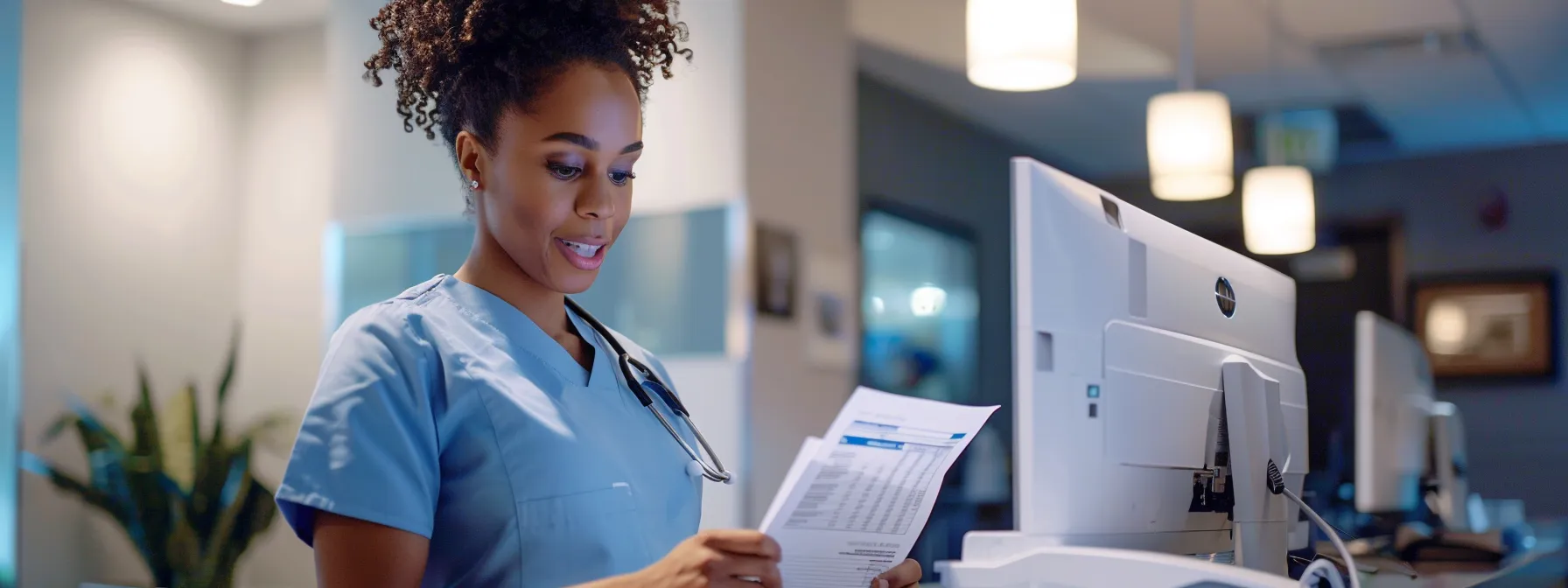
Alt text: A nurse examines a document while focused on a computer screen, showcasing a blend of patient care and technology.
Traditional fax machines in healthcare settings are not secure and pose challenges in maintaining HIPAA compliance due to lack of encryption and the need for printed copies. HIPAA-compliant fax solutions offer a secure and efficient alternative, allowing healthcare providers to send and receive faxes electronically without the need for printing, reducing the risk of physical document breaches.
HIPAA-compliant fax services use audit controls to track detailed logs of every fax transaction, ensuring transparency and traceability required by HIPAA regulations. HIPAA-compliant fax solutions often offer features like mobile faxing, allowing healthcare professionals to send and receive faxes on-the-go while protecting PHI, a feature not available with traditional fax machines. This allows for more responsive patient care coordination.
Implementing HIPAA-Compliant Faxing: A Step Toward Enhanced Patient Privacy
Healthcare providers must adopt HIPAA-compliant fax technology to ensure patient privacy and data security. This involves a thorough assessment of current procedures and identifying gaps in compliance. Providers can then select a HIPAA-compliant fax service tailored to their specific needs. Training and education on the correct use of HIPAA-compliant fax technology is crucial for a seamless transition and mitigating human error.
Clear policies and procedures should be established, including handling failed transmissions, maintaining and disposing of physical documents, and handling suspected breaches. Implementing these solutions contributes to an environment of trust, allowing patients to trust that their sensitive health information is transmitted following strict security standards. This implementation is not only a regulatory requirement but a fundamental component of quality healthcare provision in the digital age.
Overall, the use of HIPAA-compliant fax technology plays a critical role in protecting patient data and maintaining trust in healthcare settings. By prioritizing compliance, healthcare providers can better safeguard PHI, reduce risks associated with traditional faxing, and focus on delivering high-quality care without the additional concerns of data security violations.
